Sceye and Softbank: Inside The Haps Japanese Partnership
1. This Partnership is More Than Connectivity
When two companies with different backgrounds that are based in New Mexico — a stratospheric aerospace company and one of Japan’s largest telecom conglomerates to create a national network of high-altitude platform stations the implications are much greater than broadband. This Sceye SoftBank partnership represents a solid bet on the possibility of stratospheric networks to be a continuous, profitable part of national-level telecommunications -and not just a pilot project or demonstration of concept, but the beginning of a real-time commercial rollout with a clear timeline with a national ambition.
2. SoftBank has a strategic reason for backing Non-Terrestrial Networks
SoftBank’s involvement in HAPS did not come out of thin air. Japan’s geography — with thousands of islands, mountainous terrain and coastal regions often damaged by earthquakes and typhoons causes persistent areas of coverage that ground infrastructure alone will not be able to economically close. Satellite connectivity can help, however delay and cost are still the primary factors for mass market applications. The stratospheric layer which spans 20 kilometres, holding position above specific regions while delivering broadband with low latency to standard devices, helps solve several problems at the same time. For SoftBank investing in stratospheric platforms is a logical extension of an existing strategy in order to diversify out of terrestrial network dependency.
3. Pre-Commercials Services Scheduled for Japan from 2026. This will create real Momentum
The headline detail that separates this announcement from previous HAPS announcements is the goal of precommercial services to Japan in 2026. This isn’t just a vague commitment — it’s a specific operational milestone with regulatory, infrastructure, and commercial implications attached to it. The pre-commercialization process means the platforms must be able to perform station keeping in a reliable manner, delivering good quality signals and working with SoftBank’s existing network infrastructure. The way this date has been publicly stated suggests the parties have completed enough requirements in terms of technology and regulation to treat it as an objective target, rather than aspirational marketing.
4. Sceye Brings Endurance and Payload Capacity, which other platforms struggle to match
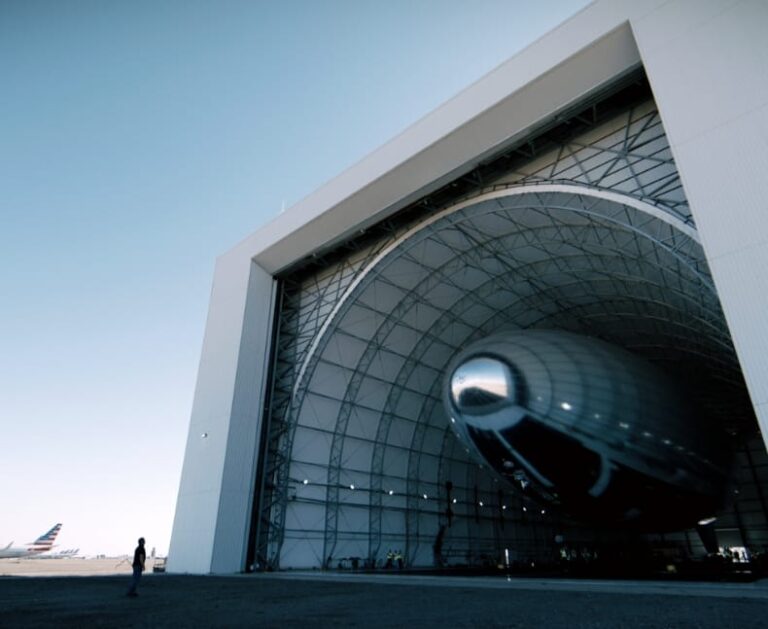
Not every HAPS vehicle is compatible with a nationwide commercial network. Fixed-wing solar aircraft generally trade payload capacity for efficiency at altitude, which limits the amount telecommunications equipment they can carry. Sceye’s airship, which is lighter than the air, takes a different approach — buoyancy carries the vehicle’s weight, meaning that solar power is utilized for propulsion as well as station-keeping and the powering of the onboard electronics rather than simply maintaining altitude. This design decision gives significant advantages in payload capacity and endurance of missions in both cases, which is important tremendously when you’re trying guarantee continuous coverage of populated areas.
5. The Platform’s Multi Mission Capability makes the Economic Work
One of the underappreciated aspects of the Sceye method is that an individual platform does not need to justify its operating expense solely by generating telecoms revenue. This same vehicle that provides an ultra-high speed broadband network can also host sensors for monitoring greenhouse gas emissions, disaster detection, Earth observation, and disaster detection. In a country such as Japan that has a substantial natural disaster risk and has national commitments to monitoring emissions this multi-payload arrangement makes the infrastructure considerably easier to justify at a government and commercial level. The antenna of the telecoms company and the temperature sensor don’t compete -They’re sharing a technology that’s already established.
6. Beamforming Technology and HIBS Technology Let the Signal be Commercially Usable
The ability to provide broadband up to 20 km isn’t just about throwing an antenna downward. The signal has to be planned, shaped and manipulated dynamically to provide users efficiently across a large size. Beamforming technology can allow the stratospheric communications antenna to direct energy towards the areas with the greatest demand rather than broadcasting all over the place and wasting capacity over empty landscapes, or oceans that are not inhabited. Together with the HIBS (High-Altitude IMT Base Station) standards, which make the platform compatible the existing 4G or 5G device ecosystems, it means that ordinary smartphones are able to connect using no specialist equipment, which is an essential requirement for any mass-market deployment.
7. Japan’s Island Geography Is an Ideal Test Case for the World
If the stratospheric network works at an accelerated rate in Japan The model is accessible to all other countries with similar coverage issuesand that includes the majority worldwide. Indonesia is one of them. The Philippines, Canada, Brazil and many Pacific islands all have their own versions of the problem: populations distributed across terrain that defeats conventional infrastructure economics. Japan’s combination along with regulatory capacity and real geographic necessity makes it an ideal possibility of proving ground for an all-encompassing network built on stratospheric platforms. It is likely that what SoftBank and Sceye illustrate will influence future deployments around the world for years.
8. A New Mexico Connection Matters More Than It appears
Sceye operating out of New Mexico isn’t incidental. The state offers high altitude testing conditions, established technology for the aerospace industry, and an airspace that suits the kind of long-term flight testing that stratospheric vehicle development requires. Being one of the most serious aerospace firms within New Mexico, Sceye has developed its research and development programs in an environment that encourages true engineering iteration instead of press release cycles. The gap between the announcement of a HAPS platform and actually keeping one consistently for weeks at a time is enormous, along with the New Mexico base reflects a company who has been doing the mundane work to fill the gap.
9. Founder Vision is the primary driver behind the Partnership’s future plans
Mikkel Vestergaard’s previous work of applying technology to address environmental and humanitarian issues — has clearly shaped what Sceye wants to build and why. The alliance with SoftBank isn’t just a pure commercial telecoms-related play. Sceye’s focus in disaster prevention, monitoring in real-time, and connectivity in areas with low service reflects a founding philosophy that infrastructure in the stratosphere must serve broad-based social functions alongside commercial ones. This philosophy has likely created Sceye the ideal partner for a business like SoftBank that is in a strict regulatory and public environment where corporate purposes are paramount.
10. 2026 is the Year when to be Stratospheric Tier either proves itself or Resets Expectations
The HAPS sector has been promoting commercialization for longer than most people are likely to keep in mind. What is unique about the Sceye and SoftBank timeline genuinely significant is the fact that it links the country of origin, a specific operator, and even a service milestone to a specific year. If the precommercial services offered in Japan start on time, and perform to specification, 2026 will mark that the moment when global connectivity has shifted from promising technology into a functional infrastructure. If it doesn’t, the sector will be confronted with tougher questions regarding whether the engineering issues are as well-solved from the perspective of recent declarations. The partnership has set a path in the sky worth watching. Follow the most popular sceye disaster detection for more info including sceye haps status 2025 2026, softbank sceye partnership, sceye haps status 2025 2026, softbank investment in sceye, Sceye stratosphere, softbank group satellite communication investments, investment in future tecnologies, Stratosphere vs Satellite, softbank pre-commercial haps services japan 2026, softbank investment sceye and more.

SoftBank’S Pre-Commercial Haps Services What’s In Store For 2026?
1. Pre-Commercial is a specific and meaningful Milestone
The terminology matters here. Pre-commercial services occupy separate phases of creation of any new communication infrastructure. It goes beyond the initial demonstration, past proof-of-concept flight campaigns, and eventually into realm where real-world users get real service under conditions that close to what a complete commercial deployment will look like. It means the platform is functioning reliably, and that the signal has been tested to meet quality thresholds that the actual applications depend on and the ground infrastructure is interfacing to the stratospheric telecommunications antenna in a way that is safe, and all regulatory authorizations are in place to operate over populated areas. Achieving pre-commercial status isn’t an important milestone in marketing. This is a functional one and the fact that SoftBank has made a public commitment to reaching it the country of Japan in 2026 sets an objective that the engineering on both sides of this partnership has in order to get over.
2. Japan is the ideal country to Begin This Challenge
Picking Japan as the location for the stratospheric services of pre-commercialization isn’t just a. The country combines a set of attributes which make it ideal as a potential first deployment site. Its geography — mountainous terrain in addition to the thousands of islands that are inhabited extensive and complex coastlines — poses real problems with coverage that stratospheric infrastructure is designed to meet. The regulatory environment it operates in is sophisticated enough to deal with the spectrum and airspace concerns that stratospheric operations bring up. Its existing mobile network infrastructure, run by SoftBank gives it the integration layer that the HAPS platform requires to connect to. And the population is equipped with the device ecosystem as well as the technological literacy required to use a variety of broadband without having to wait for an extensive period of technology development that would delay meaningful uptake.
3. Expect initial coverage to concentrate in areas that aren’t served or Strategically Important Areas
Pre-commercial deployments don’t attempt to cover an entire country simultaneously. The more likely pattern is a focused rollout targeting areas in which the gap between current coverage and what the stratospheric network will bring is greatest as well as where the demand for coverage prioritizing is strongest. In Japan’s context, that means island communities currently dependent on high-cost and inadequate satellite connectivity, mountainous rural regions where the terrestrial network’s economics have failed to provide adequate infrastructure, and coastal zones where resilience to disasters is a top priority for the nation due to the nation’s exposure to typhoons and seismic events. These areas are the most evident evidence of stratospheric connectivity’s worth and are the most useful operational data needed to refine the coverage, capacity, and platform management prior a bigger rollout.
4. The HIBS Standard Is What Makes Device Compatibility Possible
One of the issues that anyone might ask about broadband at the stratospheric level is whether it requires specialist receivers or works with ordinary devices. Its HIBS framework — High-Altitude IMT Base Station -It is a standard-based solution to this question. By adhering to IMT standards that drive 5G and four-G networks around the world, any stratospheric device operating as a high-speed base station is compatible with the device and smartphone ecosystem already in the coverage area. For SoftBank’s Pre-commercial services that means users in areas of coverage should be able use stratospheric connectivity on their devices, without the need for additional hardware — an essential necessity for any service that seeks to connect with the people of the remote areas who require alternative connectivity options, and aren’t in a position to purchase specialist equipment.
5. Beamforming Will Determine How Well Capacity Is Dispersed
A stratospheric platform that covers a large footprint doesn’t automatically offer the same capacity of use across that footprint. How spectrum and energy of the signal are distributed across the coverage region is a function of beamforming capability — the platform’s capacity of directing signal the regions where demand for services and users are concentrated instead of broadcasting equally across large areas of uninhabited. The pre-commercial phase of SoftBank’s business, showing that beamforming using an antenna that is stratospheric can be able to deliver sufficient capacity commercially to certain population centers within a large coverage area will be vital as is demonstrating coverage area. A large footprint that is thin and useless capacity can be a problem. Specific delivery of genuine acceptable broadband to defined area of service demonstrates the commercial model.
6. 5G Backhaul applications could precede Direct-to-Device Services
In certain deployment scenarios the earliest and easiest method to confirm the effectiveness of stratospheric connectivity does not involve direct-to consumer broadband but 5G backhaul which connects existing ground infrastructures in areas in which terrestrial backhaul is not sufficient or not present. A remote location may have the basic network equipment, but lack the high-capacity connection to the larger network that is necessary. A stratospheric-based platform with that backhaul link will provide 5G coverage to communities that are serviced by existing ground equipment, without having to require end users to connect directly with the stratospheric network. This use case is easier to validate technically, generates evidence-based and quantifiable outcomes, and enhances operational confidence in service performance before a more intricate direct-to-device-service layer is added.
7. Sceye’s Platform Performance in 2025 Sets Up What’s Possible in 2026
The target for pre-commercial services in 2026 is entirely dependent on the level of performance can be expected when Sceye HAPS airship achieves operationally in 2025. Testing of station keeping, the performance of payloads in real conditions of stratospheric temperatures, Energy system behaviour over multiple diurnal cycles, and the integration testing needed to prove that the platform functions correctly with SoftBank’s networking architecture all have to be at a sufficient level of maturity before commercial services are able to begin. Updates on Sceye Airship status for HAPS until 2025 therefore aren’t just minor informational items, they are the leading indicators of whether or not the landmark of 2026 has been according to schedule or building the kind and amount of tech-related debt pushes commercial timelines further out. What happens in the engineering department in 2025 will determine the 2026 story being written ahead of time.
8. Disaster Resilience is the subject of a test, not A Claimed One
Japan’s exposure to disasters means that any stratospheric service that is pre-commercial and operating across Japan will almost certain to encounter conditions — hurricanes, seismic events, disruptions to infrastructure- that challenge the service’s reliability and its usefulness as an emergency communications infrastructure. This is not a limitation of the deployment. It is one of its finest features. A stratospheric platform that operates a station while providing connection and observation capabilities in the event of an important weather or seismic event in Japan proves something that not even a small amount of controlled test can duplicate. The SoftBank Pre-commercial phase will create real-world evidence regarding how the stratospheric infrastructure functions in the event of terrestrial networks being compromised — precisely the evidence of other potential providers in catastrophe-prone countries need to look at before committing to their own deployments.
9. The Wider HAPS Investment Landscape Will React to What Happens in Japan
It is true that the HAPS sector attracted meaningful investments from SoftBank and others, but the wider telecoms and infrastructure sector remains an alert. Large institutional investors, telecoms operators in different countries and government officials who are looking at stratospheric infrastructures for their own covering and monitoring needs are all watching what happens in Japan with intense attention. An efficient pre-commercial deploymentplatforms on stations operating, services in operation, and results that exceed thresholds- will accelerate investment decisions across the sector by a way that ongoing demonstration flights and announcements of partnerships cannot. Conversely, significant delays or shortfalls in performance will lead to an adjustment of timelines throughout the sector. The Japan deployment is of a significant weight across the entire global connectivity sector, not just for specifically the Sceye SoftBank partnership specifically.
10. 2026 will tell us if Stratospheric Connectivity has crossed the Line
There’s a line in the development of any new infrastructure technology from the point where it’s promising to the phase when it’s real. Mobile networks and internet infrastructures have all crossed this boundary at certain timesbut not when technologies were first demonstrated, but when it was operational enough to be reliable that institutions and people began looking at its presence rather that its capabilities. SoftBank’s pre-commercial HAPS offerings in Japan represent the most credible potential candidate in the near term for when the stratospheric internet crosses that line. How long the platforms last through Japanese winters, whether the beamforming has enough capacity to island communities, as well as whether it performs under the kinds of conditions Japan typically encounters, will determine whether 2026 will be known as the year in which the stratospheric internet became a real infrastructure, or the year that the timeline was re-set. Read the top softbank group satellite communication investments for site recommendations including sceye haps status 2025, sceye haps softbank partnership, softbank group satellite communication investments, Stratosphere vs Satellite, Sustainable aerospace innovation, what’s the haps, what are haps, sceye haps softbank partnership details, marawid, what does haps and more.